
Assessment of variation among eleven kenaf germplasm using molecular markers

ABSTRACT

Genetic variation of 11 kenaf (Hibiscus cannabinus L.) germplasm was analyzed through SSR primers. Outof 25 primers 8 polymorphic primers were detected among the kenaf germplasm. A total of 22 alleles were detected in 11 kenaf germplasm. The highest number of alleles (4) was detected by marker JMBD2064. The highest level of gene diversity value (0.640) was observed for primer 2064. The study revealed that markers having the highest number of alleles showed higher gene diversity. The PIC values ranged from a low of 0.253 (JMBD880) to a high of 0.581 (JMBD2064). PIC values also showed a significant positive correlation with the number of alleles and allele size range for microsatellites. The highest genetic distance (0.857) was observed between the accessions 4626, 3827 and 4626, 5029. For dendrogram the Unweighted Pair Group Method with Arithmetic Means (UPGMA) cluster tree analysis led to the grouping of the 11 germplasm into three clusters. Cluster 1, 2, and 3 contain 5, 2 and 4 germplasm respectively. Overall, this study indicated that germplasm having the highest genetic variation can be used as parental source for improved breeding lines to develop kenaf varieties.

Key words: Kenaf, molecular marker, genetic variation

Introduction

Kenaf (Hibiscus cannabinus L.) is a fibre yielding crop cultivated as substitute of jute. It is a bast fibre crop like jute having versatile applications. In Bangladesh, the fibre from kenaf is primarily mixed with bast fibre obtained from jute for making bags, sacks, twines, ropes, cordages and carpets. Kenaf is rapidly replacing jute, because the crop has less labour requirements, is cheaper to produce, may be grown on a wide range of soils under varied climatic conditions, and is not necessarily competitive with food crops. Kenaf also produces more biomass in poor soil where even jute cannot be grown. Genetic variability is the pre-requisite for any plant breeding program. Wild, weedy, primitive cultivar, land races and advanced breeding lines of crops are the major components of genetic resources. There is a germplasm depository (Gene Bank) at Bangladesh Jute Research Institute (BJRI). Before these resources can be exploited, they should be systematically evaluated to assess genetic diversity. DNA fingerprinting is an important approach to identify duplicates in the germplasm collections. Core collection or a subset of germplasm that might comprise up to 10 percent of the total and represent genetic diversity of a large collection can be evaluated through molecular markers. Such well characterized collection would be easy to maintain and serve as asource of material for use in breeding programs for introducing desired variability to develop improved varieties of crop plants. With increasing production and utilization of kenaf breeding for desired agronomic traits such as high fiber yield and disease-resistance become important. There are many local varieties and germplasm of kenaf. Their qualitative traits need to be improved. Before hybridization, selection of parents is an important step. Morphological characters have provided very limited information for varietal identification of kenaf germplasm (Deng et al., 1994; Siepe et al., 1997; Cheng et al., 2002). This selection procedure can be practiced based on polymorphism in DNA level. Random amplified polymorphic DNA (RAPD), simple sequence repeat (SSR) have been developed (Zhang et al., 2013). The detection of polymorphism by DNA-based methods such as Random Amplification of Polymorphic DNA (RAPD) and microsatellite markers (SSR) is more accurate than morphological methods (Rajora and Rahman 2003). SSRs are the most important genetic markers for the analysis of genetic diversity, high
Effect of seed rate and nitrogen doses on yield performances of lentil

ABSTRACT

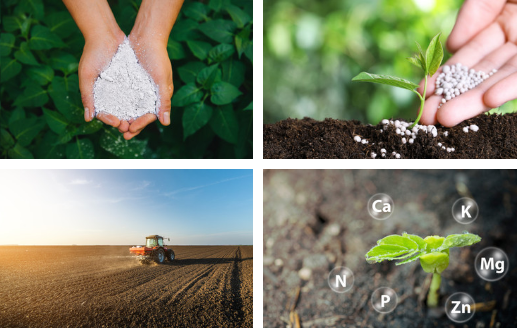
An experiment was conducted at the agronomy field of Bangladesh Agricultural University, Mymensingh to determine the effect of seed rate and fertilizer doses on yield components of lentil (Lens culinaris Medic). The experiment was laid out in randomly complete block design (RCBD) with three replications. Three doses of nitrogen fertilizer, viz. N1= 25 kg/ha, N2= 40 kg/ha, N3= 55 kg/ha and two seed rate, viz., S1= 35 kg/ha, S2= 45 kg/ha were used as experimental treatments. Result revealed that the highest yield (1.067 tha-1) was found in higher seed rate (S2-45 kgha-1). On the other hand, medium fertilizer dose (40 kgha-1 urea dose) confirmed the highest yield (1.1083 tha-1) of lentil. Furthermore, the highest lentil yield (1.20 tha-1) was recorded in S2N2 interaction. The study also concluded that yield was positively correlate with plant height, number of branches per plant and number of pods per plant but negatively correlate with days to maturity.

Key words: Lentil, seed rate, nitrogen, yield attributes

Introduction Lentil (Lens culinaris) is an important food source for the people especially in the subcontinent (Singh and Singh, 2014). It is originated mainly from the eastern Mediterranean Egypt, Greek & Asia then Hindukush Mountain in India and later stage in Africa, America & Europe (Al-Khayri et al., 2019).  It is rich in proteins and contains high concentrations of essential amino acids like isoleucine and lysine, as well as other nutrients like dietary fiber, folate, vitamin B1, and minerals (Rozan et al., 2001). Research showed that it contains 25% protein, 60% CHO, 4.5% fat and 11% water which are comparatively higher than the other pulse crops (Singh et al., 2016). It is grown as a sole crop and may be inter-cropped with wheat, mustard and chickpea (Biswas et al., 2020). Although lentil requires fertilizers however, it also plays important role to fix nitrogen to soil from the atmosphere (Suryapani et al., 2012). Bangladesh is an over populated country and cultivable land is decreasing day by day creating major problems for food. To get higher production from the available cultivable land resources, feasible conditions for cultivation are needed and the importance of nutrients in plant growth and yield are well known (Shrivastav et al., 2020). Nitrogen is one of the essential plant nutrients, which can augment the production to a great extent. Again, seed rate has a positive effect on total yield as well as with the net profit return (Boyer et al., 2020). Reports showed that combination of seed rate with fertilizer can increase the yield as well as protein content of barley and wheat seed (Walsh and Walsh, 2019). So, this experiment was undertaken to understand the combine effect of seed rate and nitrogen doses on the growth and yield of lentil.

Jute based farming system: achievement, challenges and prospects in Bangladesh

ABSTRACT

Research on farming systems is being carried out in the farmers’ fields and homestead with their management for developing or testing, validating and disseminating technologies to the farmers. On-farm research and technology transfer activities are performed through demonstration (jute village/block/plot), training, field visit, exhibition/fair, mass media, focus group discussion, leaflets, folders, booklets distribution and other technology transfer tools. The Jute Farming Systems Division (JFSD) conducts jute-oriented cropping system and research activities also include in some projects involving crops, livestock, fisheries and agro-forestry. Improved cropping patterns, winter vegetables with jute seed, jute seed in agro-forestry, year-round vegetables in the homestead, livestock rearing, vaccination, de-worming, and fish culture technologies in the farmers’ environment, each generated very positive and encouraging responses with high net income.

Key words: Farming system, jute, technology, cropping pattern, achievement, challenges

Introduction Farming is an integrated production system comprising crops, livestock, fisheries and agro-forestry in Bangladesh. To meet household needs, farmers produce diversified goods (Gilbert et al., 2001). On-farm research, on the other hand, is an indispensable method for developing and validating agricultural technology. It can be described in its simplest terms as research carried out at farmers’ field with their management (Hossain and Haque, 2012). While formal agricultural research in Bangladesh began in 1880. At the turn of the century, the provincial government began systematic research on jute (Jabbar and Abedin, 1989). In 1951, at Manik Mia Avenue, Dhaka, the Bangladesh Jute Research Institute (BJRI) was established and at that time nine regional and sub-stations were then established in various regions of Bangladesh. On-farm research was introduced in Bangladesh in 1957 focusing to encourage farmers for using fertilizers. Studies on cropping patterns and component technologies under the Agronomy Division at the Bangladesh Rice Research Institute (BRRI) began with on-farm systems research in 1974 (Jabbar and Abedin, 1989). In 1979, Bangladesh Agricultural Research Council (BARC) launched a National Coordinated Cropping Systems Research Project (CSRP) with the participation of BJRI and other institutes (Gilbert et al., 2001). BJRI conducted Farming Systems Research (FSR) activities under the National Coordinated Farming Systems Research Programme in four agro-ecological sites, such as Kalampur, Dhaka; Kanaipur, Faridpur; Vaskarkhilla, Kishoreganj and Paglapir, Rangpur (Rahman et al., 1990). Since 1996, under the coordination of BARC, the National Coordinated Farming Systems Research and Development Programme (FSRD) was being implemented at one FSRD site within the BJRI (Gilbert et al., 2001). Until the establishment of the On-farm Research Division in 1991 and then the Jute Farming System Division (JFSD) in 1997, on-farm research activities were performed under the Agronomy Division in BJRI. JFSD performs research activities in farmers’ environments and bears the responsibilities to transfer and disseminate the agricultural technologies to the farmers. In view of validation, fine tuning and also popularization of the technologies, village/block/plot demonstration, field days, training, Focus Group Discussion (FGD), seminar and workshops are carried out for technology dissemination at farm level. On farm or adaptive research are strengthened and encouraged in the context of varying socio-economic settings of the Jute and Allied Fibre (JAF) production through the involvement of government organization, non-government organization or private sector. Feedback is received by linking end users, researchers and extension personnel. In addition, it helps to determine the suitability of technology and the constraints of farm-level implementation of technologies. Although the farming system consists of crops, livestock

Effect of phosphorus and zinc on the yield and oil content of sesame

Effect of phosphorus and zinc on the yield and oil content of sesame

Bangladesh J. Environ. Sci., Vol. 36, 39-42, 2019 @ BAED ISSN 1561-9206

EFFECT OF PHOSPHORUS AND ZINC ON THE YIELD AND OIL CONTENT OF SESAME

M. S. Hossain, M. N. Alam1, S. Mandal2, M. M. Rashid3 and M. N. Morshed4

Planning and Development Division, Bangladesh Sugarcrop Research Institute, Ishurdi, Pabna

1Department of Management, Govt. Edward College, Pabna

2Farm Division, Bangladesh Sugarcrop Research Institute, Ishurdi, Pabna

3 Bangladesh Sugarcrop Research Institute, Ishurdi, Pabna

4Bangladesh Sugarcrop Research Institute, Rahmotpur Sub-station, Barishal

ABSTRACT

The experiment was conducted at the Research farm of the Department of Agronomy and Extension, Rajshahi University, Rajshahi during March to June 2016 to examine the effect of Phosphorus and Zinc on the yield and oil content of Sesame. BINA TIL-3 variety was used for the present study. This experiment was consisted of two factors; Factor-A: three levels of phosphorus viz. P0 (0 % P), P1 (20 % P) and P2 (30 % P) and Factor B: three levels of Zinc viz. Zn0 (0 % ZnO), Zn1 (2.5 % ZnO) and Zn2 (5 % ZnO). The experiment was laid out in a Randomized Complete Block Design (RCBD) with three replications. Different levels of phosphorus and zinc showed significant effect on yield and oil content of sesame. Individually phosphorus and zinc had significant effect on highest seed yield and harvest index. Interaction effect of phosphorus and zinc also showed significant effect yield and oil content of sesame. The highest Seed yield (1807.00 kgha-1), Stover yield (3203.00 kgha-1), biological yield (5009.67 kgha-1), harvest index (36.07%), oil content (47.38%) was recorded from P1Zn1.

Key words: Phosphorus, zinc, yield, oil content, BINA TIL-1